

There are versions of ourselves that belong to particular places. One exists at home. Another emerges at work. Another one appears around old friends, and sometimes an entirely different one is born after we move somewhere nobody knows us.
Languages can produce their own versions, too.
I have become increasingly aware of this since moving to Istanbul. Bulgarian belongs to one part of my life, while English seems to unlock another. Turkish is still being constructed, whereas Spanish and Hebrew carry other associations entirely.
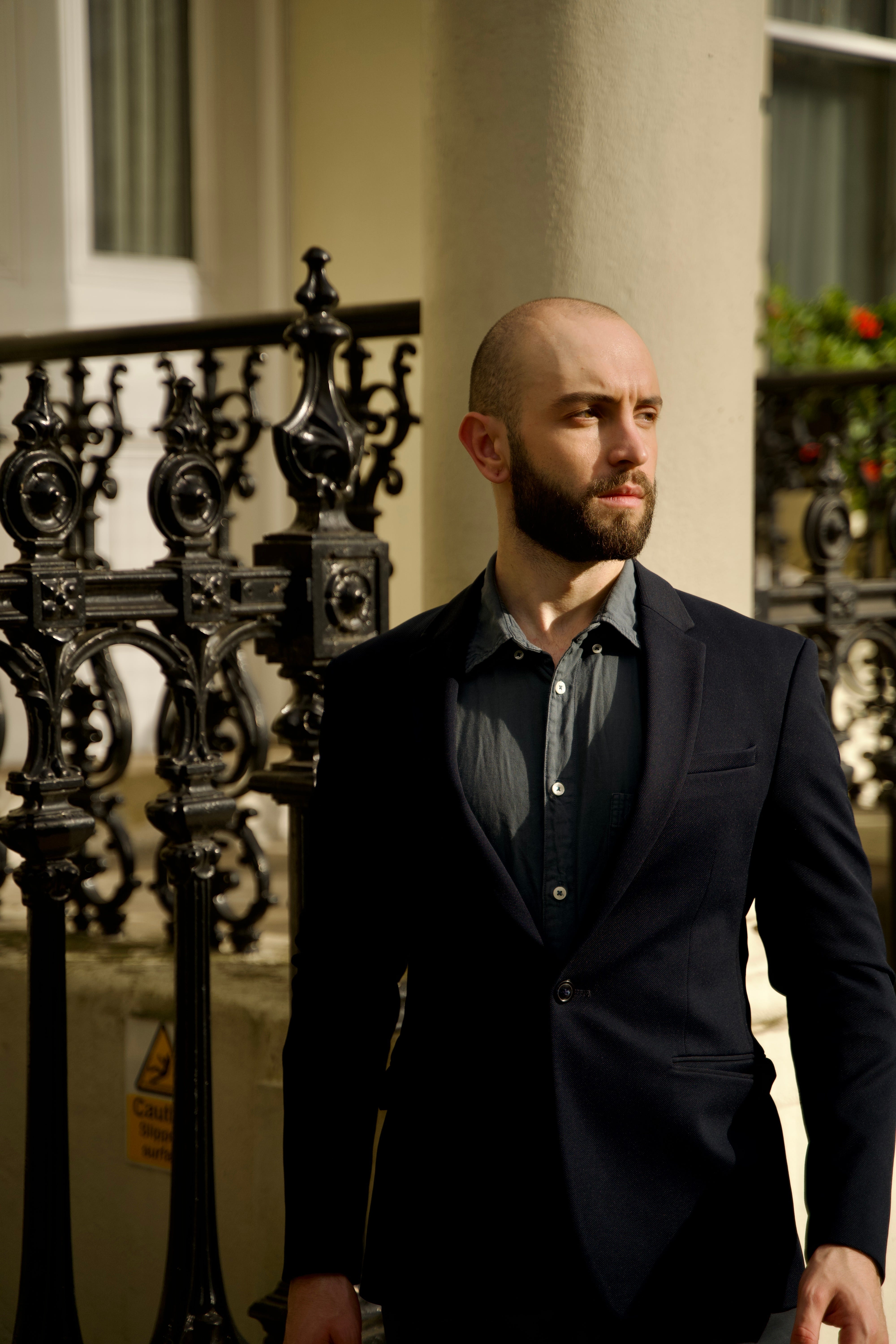
At one point during my conversation with voice and public-speaking coach Evan Holovatskyi, I described it as having five people living inside me.
He understood me immediately.
Holovatskyi has lived across Ukraine, the United States, Bulgaria and the United Kingdom. Moving between countries, he told me, has changed not just the way he communicates with others but also his idea of who he can be.
“It definitely changes me,” he said of migration, adding that a new country can allow us to create new ways of communicating and behaving while remaining ourselves.
I guess, that is one of the quietest freedoms of leaving somewhere — nobody knows your history yet.
You can arrive without the expectations of schoolmates, relatives, colleagues or an older version of yourself watching from across the room. As Holovatskyi puts it, when nobody knows you, you may be brave enough to experiment with becoming something you had always wanted to be.
He compares it to trying on clothes.
A behavior catches your attention. You borrow it. You see how it feels. If it does not fit, you return it. If it does, perhaps it slowly becomes part of you.
That idea makes reinvention sound less like destruction and more like editing.
We do not necessarily kill an old self and manufacture a new one from nothing. We collect gestures, habits, expressions, languages and ways of occupying a room. Some survive. Others are discarded.
Eventually, the person speaking sounds slightly different.
Watch the full conversation with Evan Holovatskyi on YouTube.
The language changes. Does the person?
Holovatskyi does not believe that learning another language is merely an exercise in vocabulary.
We learn what he calls an interactional style: how people greet one another, how much warmth they show, how directly they speak, how they use their bodies, what kinds of behavior are rewarded or discouraged.
Over time, the social environment begins to shape the person using the language.

It explains why returning home after living abroad can occasionally feel like meeting a preserved version of yourself.
You walk back into an old environment carrying new habits and are suddenly confronted with the person who used to exist there.
People notice.
“You’re not the same. You’ve changed.”
Holovatskyi describes the process almost as the development of a new inner character: when we move somewhere new, we begin asking what kind of person we want to become there. Experience, relationships and language accumulate around that answer.
Some languages simply feel heavier though.
I told him that English often feels more liberating to me than Bulgarian. The same thought, confession or emotion can somehow become easier when expressed in a language that does not carry the full emotional architecture of childhood.
Holovatskyi believes a native language can give words greater emotional weight. Even something as apparently universal as I love you may feel different when spoken in the language in which we first learned what love, rejection or intimacy meant.
A foreign language can create a small amount of distance.
“It can feel a little like play,” he said.
That distance may be precisely what makes certain versions of ourselves easier to access.
What the voice reveals

Holovatskyi’s interest in voice began partly through dissatisfaction with his own. But the problem, he eventually realized, was not simply aesthetic.
He noticed that nervousness, insecurity and the feeling of being socially threatened could manifest physically: tension in the body, tension in the throat, a voice becoming thinner or higher.
Changing his voice therefore became inseparable from understanding why it behaved differently in certain situations.
Voice coaching can easily be misunderstood as learning to manufacture authority — lower this, slow that, remove the accent, sound more impressive.
Holovatskyi’ approaches it in a more complicated way.
There are times, he says, when we need to sound authoritative because the situation requires competence to be communicated clearly. There are others in which warmth matters more. A flexible voice should be capable of both.
The question becomes less:
How do I make my voice sound powerful?
and more:
Why does my voice stop allowing me to sound like myself?
Evan remembers being perceived as smaller, more vulnerable, even as somebody who needed to be taken care of. For a while, he wondered why other people treated him in ways he disliked. Eventually, he began examining what he himself was communicating.
In some situations, he realized, he was making himself smaller without intending to.
Voice, in that sense, becomes social information — we may verbally claim confidence while our delivery asks permission.
Holovatskyi gives a simple example: the upward inflection that turns a statement into something resembling a question.
Hello, I’m Evan? I’m a public-speaking trainer?
The words claim authority, but the sound seems to request approval.
That mismatch is where voice work becomes less cosmetic and more revealing.
The voices we borrow
But if we consciously change the way we sound, are we still being authentic?
Holovatskyi does not see imitation as the enemy.
Artists copy before developing their own style. Voice can work similarly. We may borrow a sound, a rhythm or a quality simply to discover what our instrument can do. Eventually, the borrowed elements either disappear or become integrated into something that feels like ours.
It is another version of trying on clothes.
And actually that is what many forms of reinvention are.
We imitate before we inhabit.
We perform confidence before confidence feels natural. We learn a new language before thinking in it. We enter a new country with behaviors that initially feel foreign, only to discover years later that they have become instinctive.
The performance is not necessarily evidence that something is false.
Sometimes it is rehearsal for the person we are becoming.
What do we keep?

Accents make this especially complicated.
They can be treated as problems to correct, but they can also become declarations of identity.
Holovatskyi sees accent as connected partly to integration: how strongly somebody wants to identify with a new linguistic environment may influence how much they consciously alter the way they speak. Others may choose to preserve more of their original sound because belonging does not require erasure.
That leaves us with an uncomfortable cultural question.
Who decided what intelligence sounds like? What does authority sound like?
Professionalism? Class? Belonging?
There are social conventions around all of them. Holovatskyi acknowledges that we engage in what he calls impression management, adjusting communication according to context.
But adapting and disappearing are not the same thing. The goal is not necessarily to eliminate every trace of where you came from, but to develop enough control that your voice becomes a choice rather than a reflex.
A voice is not a fixed object
Near the end of our conversation, Holovatskyi guided me through a short breathing and resonance exercise.
The effect was immediate.
My voice dropped into a more relaxed position. My speech slowed. I felt calmer.
“I don’t even want to move from here,” I told him. “It feels like a place you can inhabit for longer.”
Which made me wonder…
Maybe a voice is less like a sound we possess and more like a place we repeatedly return to.
It changes when the body changes. It changes when we become frightened. It changes when we fall in love, migrate, age, gain confidence, lose confidence, learn languages, change careers and enter rooms where different versions of ourselves are required.
Holovatskyi calls it a constant process.
The voice, he says, reflects the “finest particles of the human soul.” As we change physically and emotionally, it changes with us.
Five years had passed since the first time I interviewed him.
Both of us had moved through countries, professions and versions of ourselves since then, so before we ended, I asked him to complete one sentence.
A person finds their voice when…
He barely needed an explanation.
“When they meet themselves.”
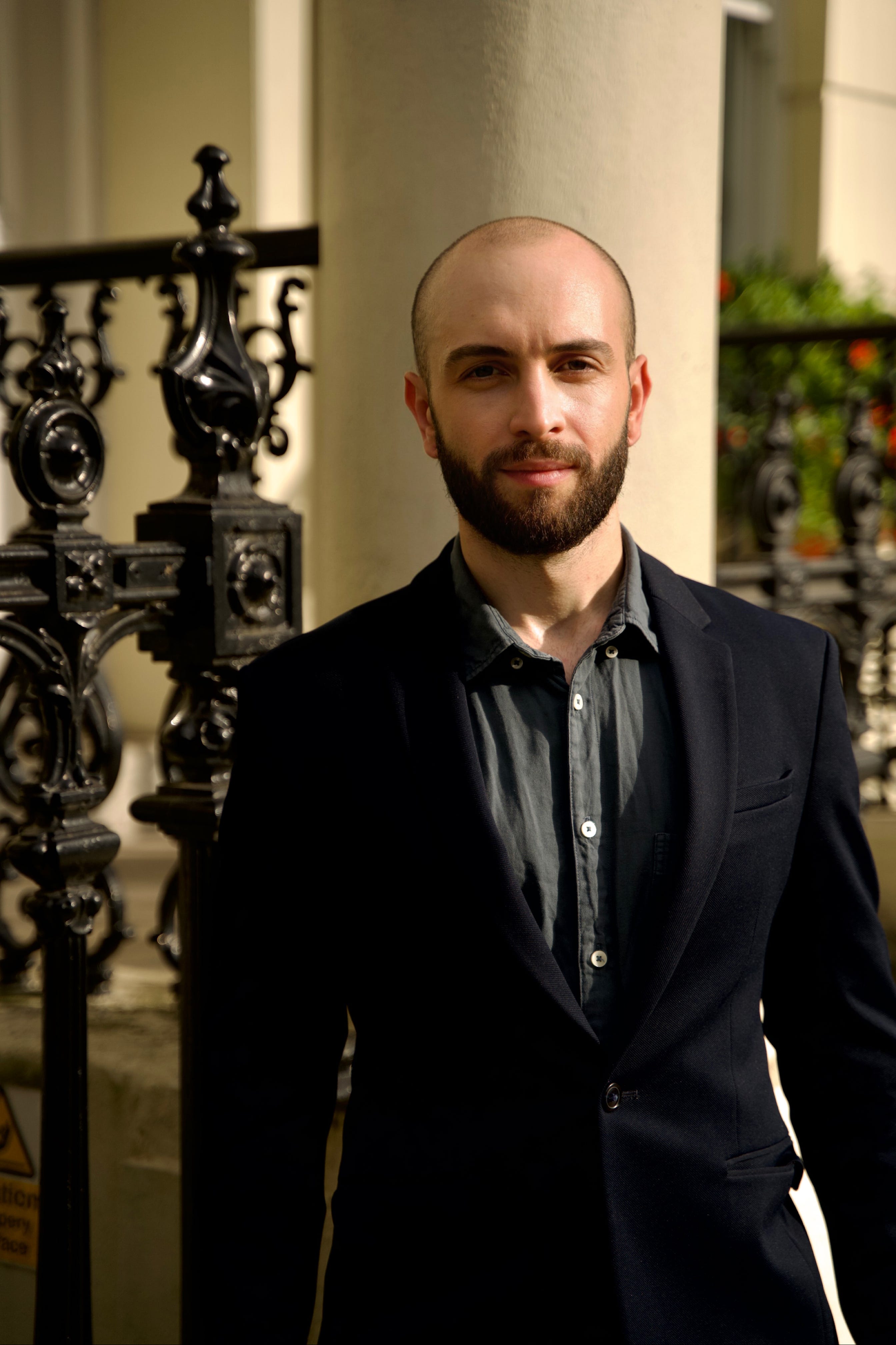
Maybe that is why finding your voice is not really about finding one permanent sound, but becoming familiar enough with yourself that, through every language, country and version still to come, you can recognise the person speaking.