

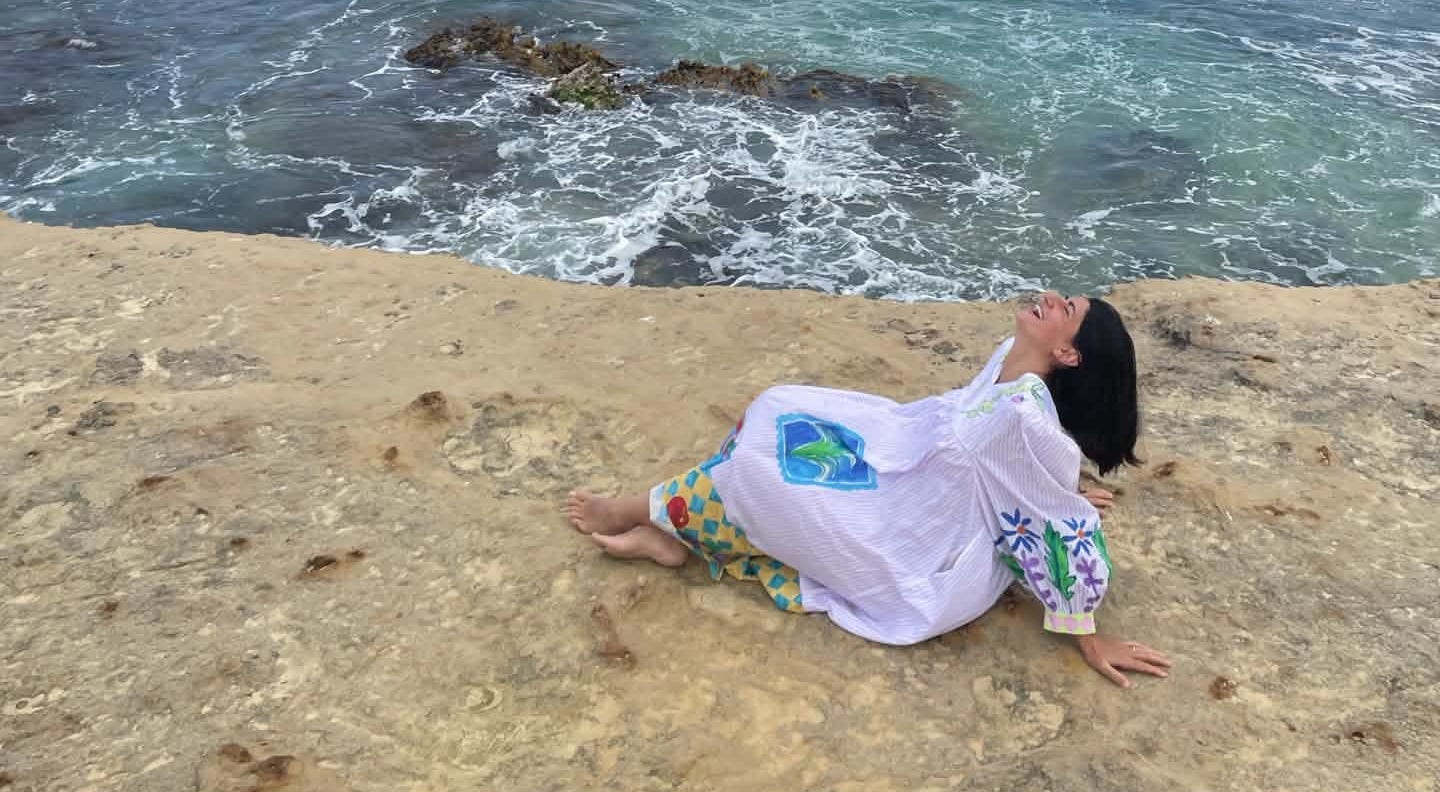
I was a tenth-grade student when I first became interested in yoga.
Having always preferred the comfort of home or water, I already knew I was not one of those sporty children who would happily sign up for every team sport available. But during the school year, when exactly was I supposed to find the time to swim?
My schedule was already full of private lessons, and, typically for a Balkan family, my mother was deeply reluctant to sign me up for swimming through winter. What I did know, however, was that I wanted to move more.
So one day, I opened YouTube and typed yoga into the search bar.
There were relatively few Bulgarian videos on the subject at the time, but one channel immediately caught my attention.
Yoga with Tanya.
From the first video I clicked, I was instantly glued to the screen and genuinely curious. Tanya — the woman whose name the channel carried and who guided the practices — gave me a significant amount of calmness and through her presence and her voice.
I watched a few more videos and eventually decided to try the very first practice she had uploaded.
I had no idea what I was going to feel, or whether I would be any good at it, but even through a screen, Tanya somehow gave me enough confidence to give the experience a try.
Fifteen minutes later, I could barely comprehend what had just happened — I felt warmth, energy, serenity, and I had the sensation that every muscle in my body had been activated, although the practice itself had been designed for relaxation. I remember feeling astonished that I had never experienced that weird combination before.
That was how my relationship with yoga — and with Tanya’s work — began, at the start of 2018. I have never really practiced with other YouTube channels. I am quite loyal: once something feels like me, I find it difficult to replace.
Tanya’s practices and meditations have been a part of my journey for a very long time and they have carried me through happiness, sadness, absence, dissatisfaction. And Tanya, in one way or another, has remained there.
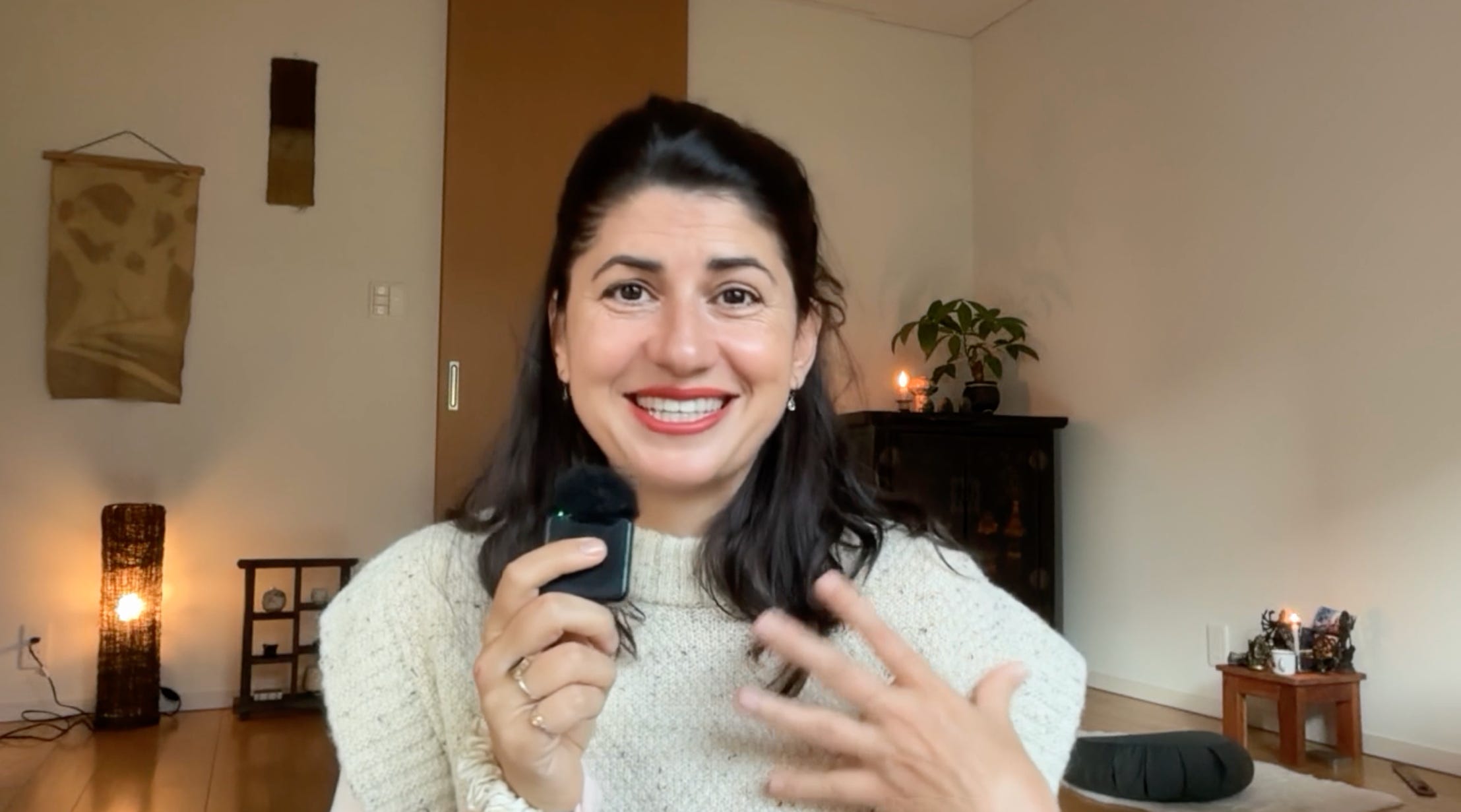
While I was putting together the September issue of The Wonder Mag — the one you are reading now — the Universe as if it was joking with me, arranged quite a coincidence:
A video from Tanya appeared on my Instagram, and after several months away from her channel and social media, she was announcing her return.
The theme of our September issue was The Return, and I was certain that I immediately had to contact her and she happily agreed to the interview.
On the morning of our conversation, I naturally woke at 5 a.m., and also naturally, I practiced yoga.
With Tanya.
At the agreed time, I sat behind my laptop feeling excited and slightly nervous, waiting for Tanya to join our online meeting from Japan and wondering which of the many questions I had prepared should come first.
Then Tanya’s familiar smile appeared on my screen.
She immediately informed me that we had about an hour because afterwards she had to rush to pick up her daughter from school. So naturally, my carefully curated list of questions I was about to ask suddenly acquired an entirely different meaning and nearly evaporated. But one thing television has taught me is that a good interview is not defined by obediently moving down a list of questions, but by knowing your material well enough to follow the conversation wherever it needs to go.
And, like a true yoga teacher, Tanya began by leading me through a short breathing exercise.
I had barely finished introducing her to the audience — something that, for tenth-grade me, is a dream come true — when she asked us to stop.
To breathe. To arrive. To pray.
The return
We began with Japan and with Tanya’s own return.
At this particular moment in her life, she says, she feels she is at a high point.
Earlier in the year, after a health problem, she told her audience that she needed to step away from creating content for approximately six months. She also asked her community to pray for her.
After her recovery, she describes what happened as a miracle.
“Something happened that, for me, was a miracle. That doesn’t mean the illness can never come back, but it was the first moment when I completely relied on the community.
“Over the five or six years that I’ve been building the business, there are people who have been with me from the very beginning. We know each other as people now, not simply as practitioners. We have shared so many moments.
“When somebody starts praying for your health, it is no longer simply a community. It is friendship.”
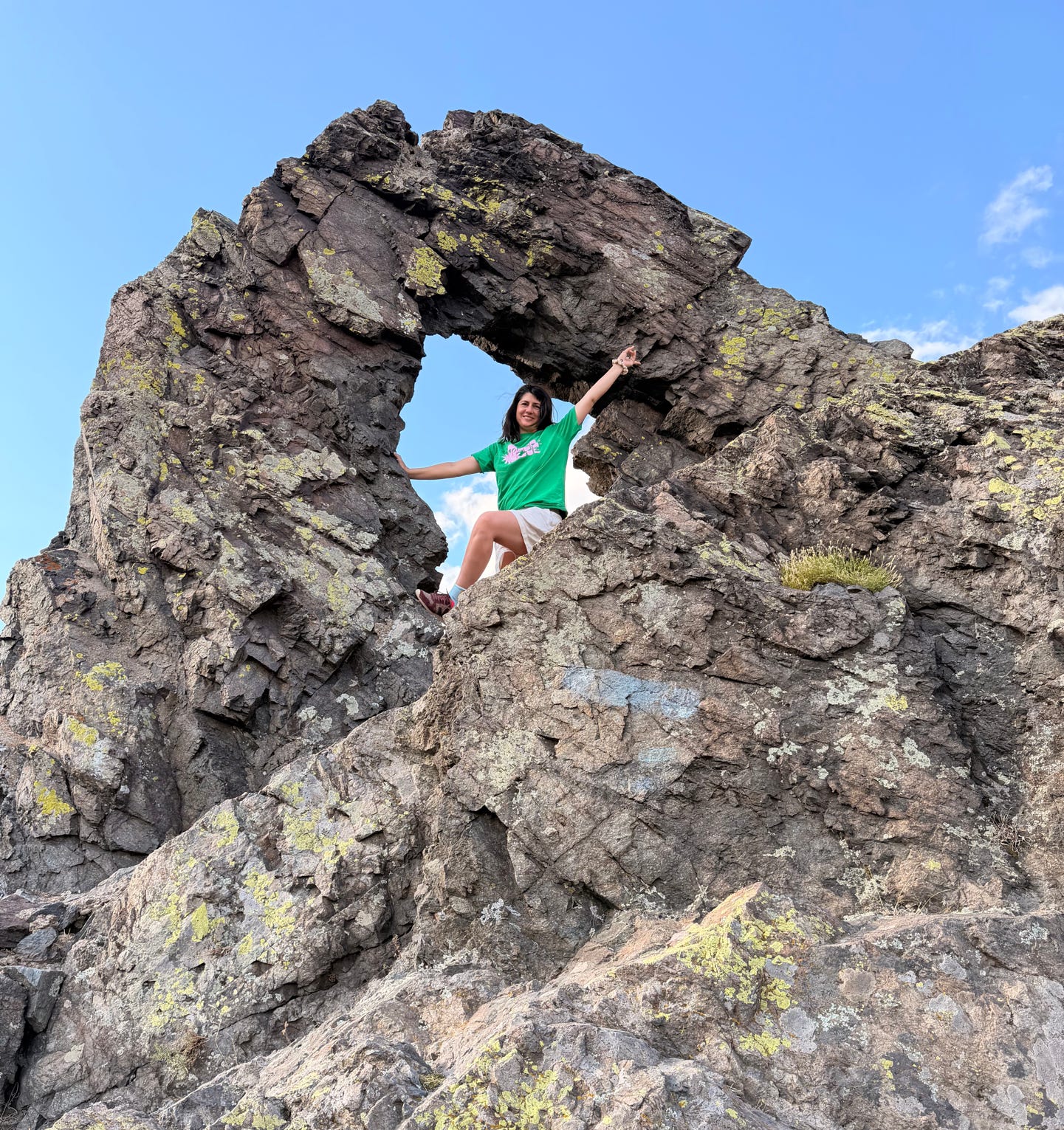
When the six-month period she had given herself came to an end in September, Tanya admits she had not known whether she would return at all.
One of the things that eventually brought her back, she says, was remembering who she was.
Back in Sliven
Tanya is from Sliven, Bulgaria, and began training in artistic gymnastics as a small child.
This year, while visiting Bulgaria with her husband and six-year-old daughter, she also returned to the gym where her own story had begun.
She tells me:
“I met the wife of the judo coach there, and he suggested opening the gym on Saturday so the children could jump on the trampolines. I have a six-year-old daughter, and I wanted to show her the gym where I grew up.”
Tanya asks me to guess who eventually spent the most time jumping. We both laugh. It was, naturally, Tanya.
Decades had passed, but when she stepped onto the floor again and began moving — even doing somersaults — she reached the simple conclusion that “the body remembers.”
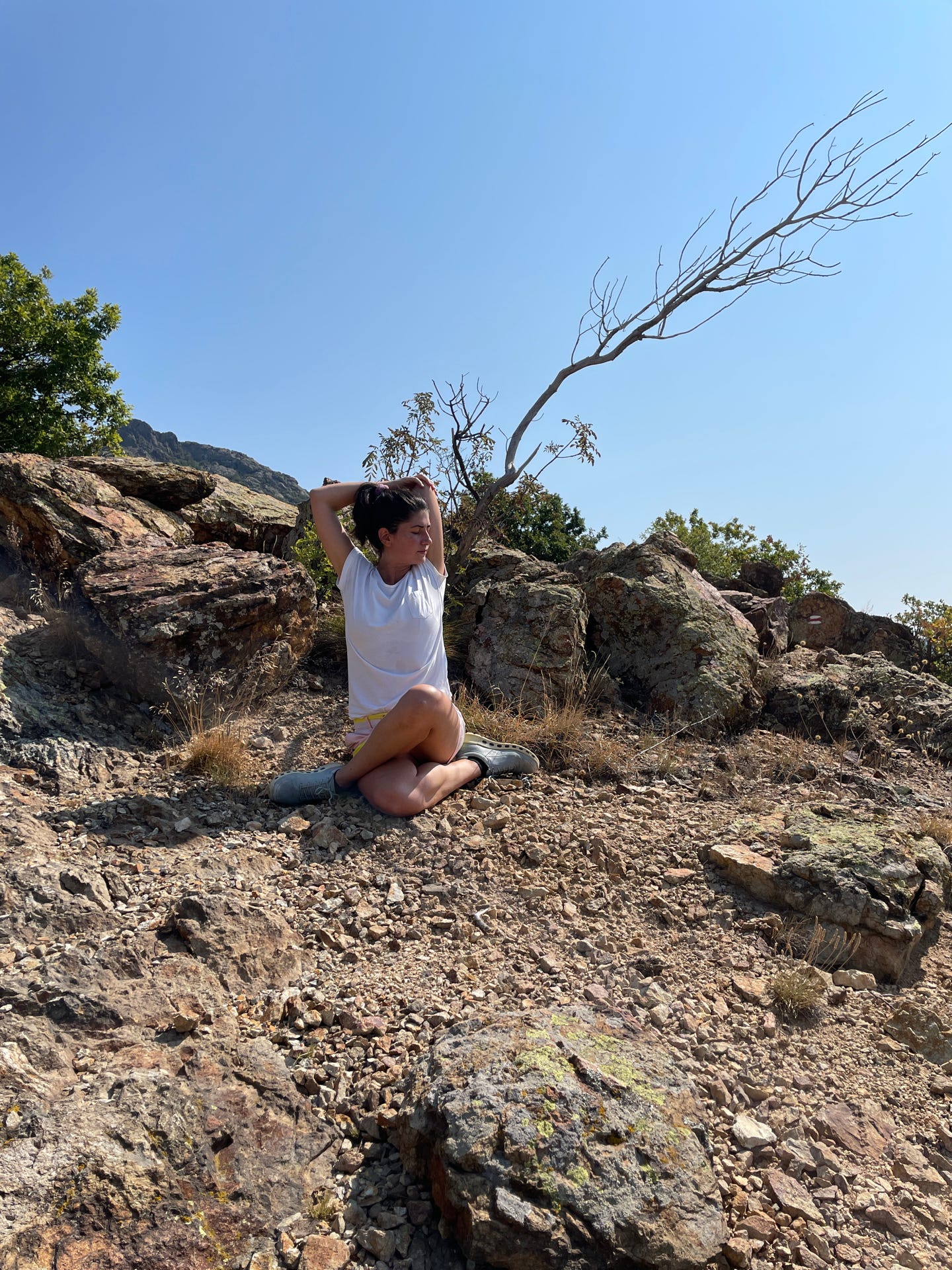
She could feel the competitor and the winner inside her returning and the two made her return to the community certain.
She recognized again the person who understood her body and had spent a lifetime working through it.
As a young gymnast, Tanya had already learned that skill alone was not enough.
One of Bulgaria’s champion gymnasts taught her how to enter the floor, how to walk, how to hold her shoulders, how to direct her gaze.
Her results changed almost immediately.
“I didn’t change anything about my physical abilities. I changed the feeling inside.”
The life that keeps moving upward


After gymnastics came injury — and a fierce pursuit of academic success. Tanya was an exceptional student and deeply involved in extracurricular life at school.
Then, at eighteen, she moved to Malta with her parents. Bulgaria was not yet a member of the European Union, which meant that the young Tanya suddenly found herself helping secure residency permits for herself and her family — something I know from personal experience can become an exhausting bureaucratic hell.
She remembers:
“It is different to move somewhere alone as a student and to move with your entire family. A lot of adult responsibilities fall onto the child.
“Bulgaria still wasn’t in the European Union. Everyone’s visa depended partly on whether I could deal with the police, the bank and the paperwork. At the same time, I was studying at university and also working because we didn’t have the money to pay for my education.
“A child suddenly has so many responsibilities that there is no time to process what is actually happening.”
After that chapter, Tanya felt the need for another escape.
Once she completed her bachelor’s degree in international relations in Malta, she decided to pursue a master’s degree in Sweden.
She explains that she wanted to go somewhere nobody cared who she was. Malta is small, so everybody knows everybody. Sweden, in contrast, offered anonymity — and that was precisely what attracted her.
It was also in Sweden that she first encountered yoga, through a fellow university student. Tanya, unwilling to fall behind on anything new, immediately signed up for classes.
The competitive instinct was still there. She wanted to get better.
And Sweden eventually became the place where she was able, at last, to experience something closer to a conventional student life: parties, fun, new circles of people, new languages, new versions of herself.
Then came Brussels.
Her days filled with work, French lessons, evening art courses, life-drawing classes and coaching children in gymnastics.
Somewhere inside all of that, she still had to find room for a personal life.
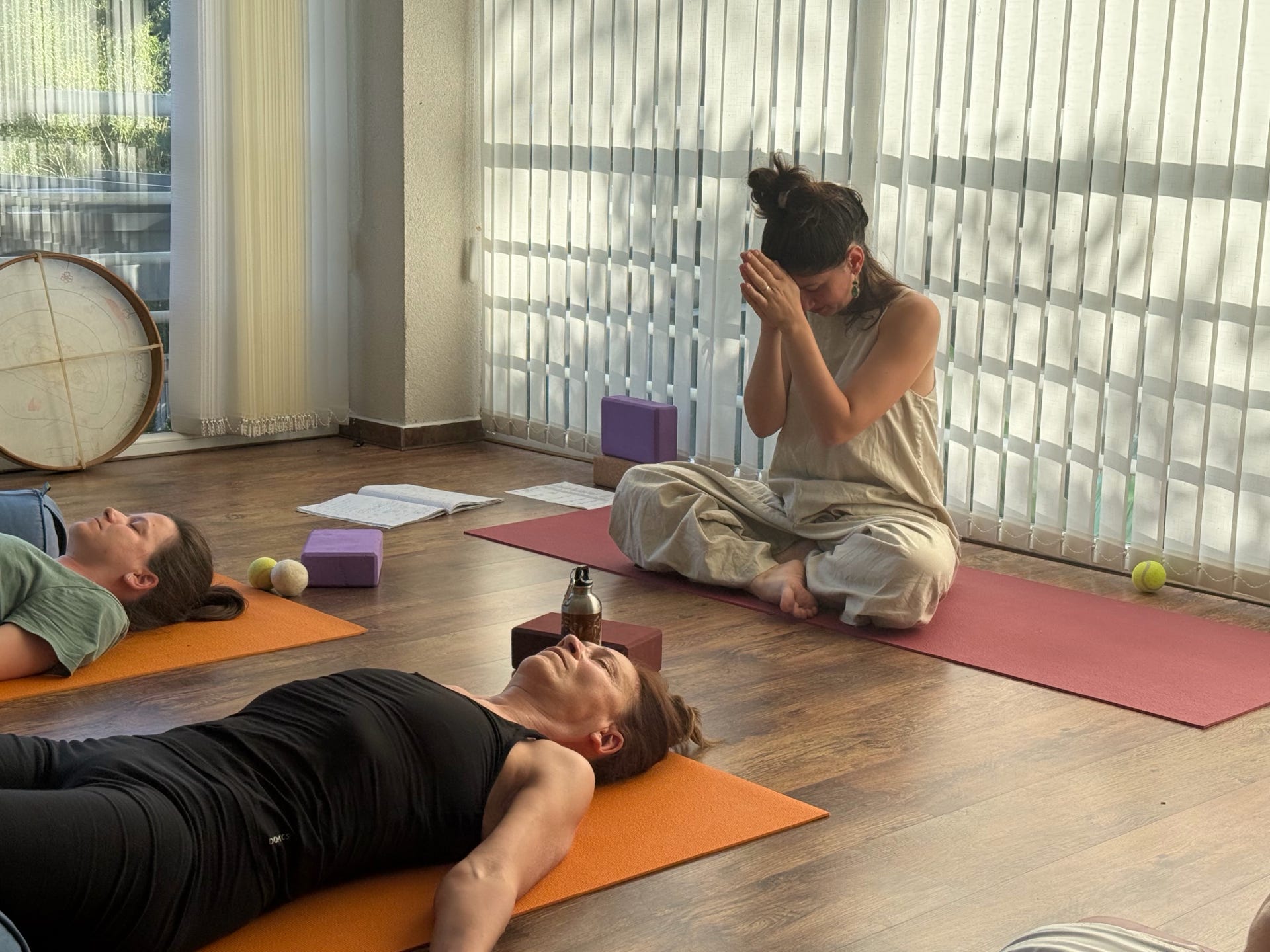
Yoga began to serve a different purpose.
“Yoga was a way for me to relax, a way of returning to myself.”
When you carry that many interests, responsibilities and identities, she tells me, something has to bring you peace. For her, yoga had always been that thing.
And yet, from the outside, there was little indication that anything in Tanya’s life was going wrong — professionally, she was doing exceptionally well. She would go to an interview and get the job, perform well, get promoted. Financially, she was progressing.
And, without attempting to romanticize her younger self, she tells me:
“I was arrogant. I was achieving everything, and I wanted more.”
Eventually, however, that upward trajectory led to burnout, and the question changed from “What should I achieve next?” to:
Why don’t I feel well?
And even more importantly: not “Which one thing should I choose?” but “Which parts of myself do I want to keep?”
“You have to choose one”
“I’ve always carried many identities,” Tanya says.
The world is very fond of telling us to choose one.
ONE: career, passion, pursuit.
But why should that rule apply when we know we want more?
Eventually, Tanya stopped fighting that battle with herself.
She stepped away from work and shifted her attention towards yoga, art and the development of Yoga with Tanya — a channel that began, almost jokingly, because her mother and mother-in-law both said they wanted to practice yoga but felt embarrassed to go into a studio with other people.
That became the idea for the channel. Tanya laughs that neither of them really kept watching afterwards. But the project they inadvertently inspired became a business.


Getting there, however, required a series of decisions — after reaching burnout, Tanya took medical leave, stopped working for a period, applied to art schools and began studying. When she later returned to her doctor, he asked:
“Are you ready to go back to work?”
“Well… no,” Tanya replied.
“Then it’s time to quit.”
So she did. She left the job and dedicated herself to yoga and art.
In the process, she discovered the fundamental piece of knowledge that if you have been many people and carried many identities, you do not necessarily have to decide which one deserves to survive.
When a pause becomes something more


The original reason for Tanya’s most recent six-month pause was art.
It was her second degree, begun after the age of thirty. But after graduation came motherhood, the Covid pandemic, and creative work gradually moved further into the background.
So she decided to give herself six months to return to it.
During that period, she realized that she did need creativity, but she also realized that a deeper root still connected her to discipline, to the gymnastics hall, and to the things she had learned as a child.
She accepted who she was, and that, she says, is why she returned.
She knows she still has something to give.
Yes, the six months had passed. A calendar could easily have told her that it was time to go back to her community.
But Tanya returned only after allowing the different versions of herself to stop competing for the title of the “correct” one.
From video to community
Yoga with Tanya began as a YouTube channel and it still continues its purpose of such, but Tanya is also quite open about the economics behind this kind of work.
YouTube, she explains, does not automatically provide sustainable income — particularly for niche content aimed primarily at a Bulgarian audience.
At some point, she began to feel the imbalance between what she was giving and the fact that the work also needed to support the person creating it.
That eventually led to Tanya’s Online Yoga Studio.
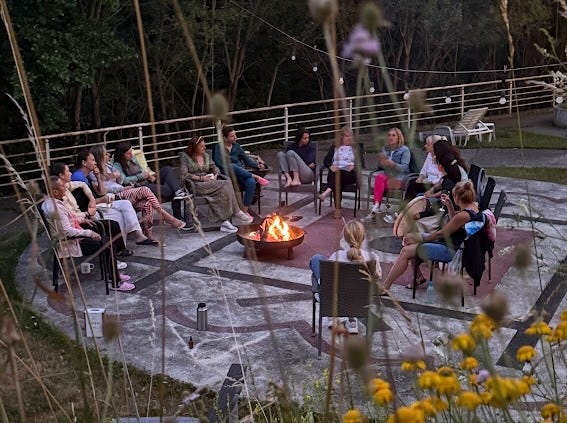
People initially join for yoga, but many remain because they want to belong to a community and they begin to know one another beyond the screen.
“I know some of these people now meet outside the online space. They go hiking together. They build friendships.
“Community is the place where you look around and realize that you are not going through all of this alone.”
And this is where Tanya’s recent six-month pause acquires another significance.
When her health problem forced her to ask for help herself, the roles reversed — the teacher needed the energy of the people she had been guiding, while the person accustomed to giving had to allow herself to receive.
Returning without going backwards
Stories about “returning” — particularly the contemporary fashionable language of becoming our new selves — can sometimes romanticize the past and create the impression that somewhere behind us exists a pure, correct version of who we once were, waiting patiently to be recovered.
Tanya offers the opposite example — she cannot become the little girl in the gymnastics hall again. Nor does she need to erase the professional, the migrant, the artist, the mother, the teacher and the creator who came afterwards.
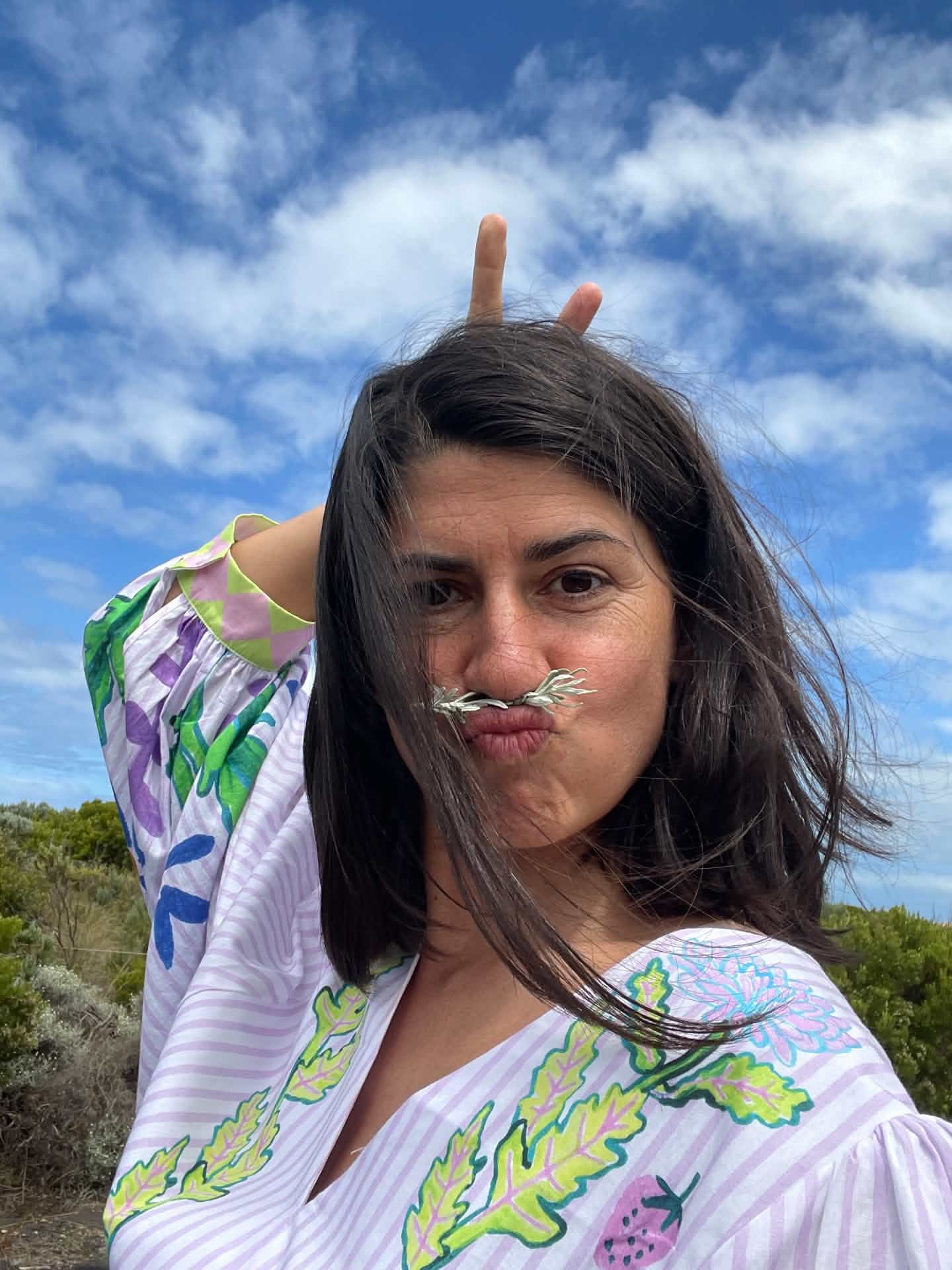
Yoga with Tanya does not need to look exactly as it did years ago, either.
What Tanya’s story is teaching us is that everything we move through remains somewhere inside us — in the ways we work, search for rhythm, understand our bodies, understand ourselves, and begin again.
Toward the end of our conversation, she tells me:
“I said that I found myself when I returned to the gymnastics hall, but I have found myself many times.
“Another layer, and another one, and then we return to the centre again. All of it is us.
“Suffering isn’t here simply to torture us. It can take us towards another layer. It can help us return, see where we are, see who our friends are, see who we have become. It is almost like cleaning ourselves.
“Difficult moments are part of life. Of course nobody wants to suffer, but we cannot expect to avoid them entirely.
“I can say that almost everybody has found Yoga with Tanya during a moment of suffering. And I found one of my own teachers, Tara Brach, during a moment of loss.
“I was looking for a video about grief because I didn’t know how to grieve when you lose somebody. I found her voice, and it guided me.
“Suffering is part of life, and finding ourselves again is part of the whole process.
“Again and again.”
Eight years ago, I knew Tanya as a wonderful voice and a yoga teacher who accompanied me through ordinary life, teaching me how to breathe and where to move my body.
Eight years later, when we finally sat down together, she once again asked me to stop and breathe with her, feel the moment. Pray.
This time, however, I also got to meet the woman behind the voice. And I left admiring Tanya every bit as much as I did before — only now for many more reasons.