

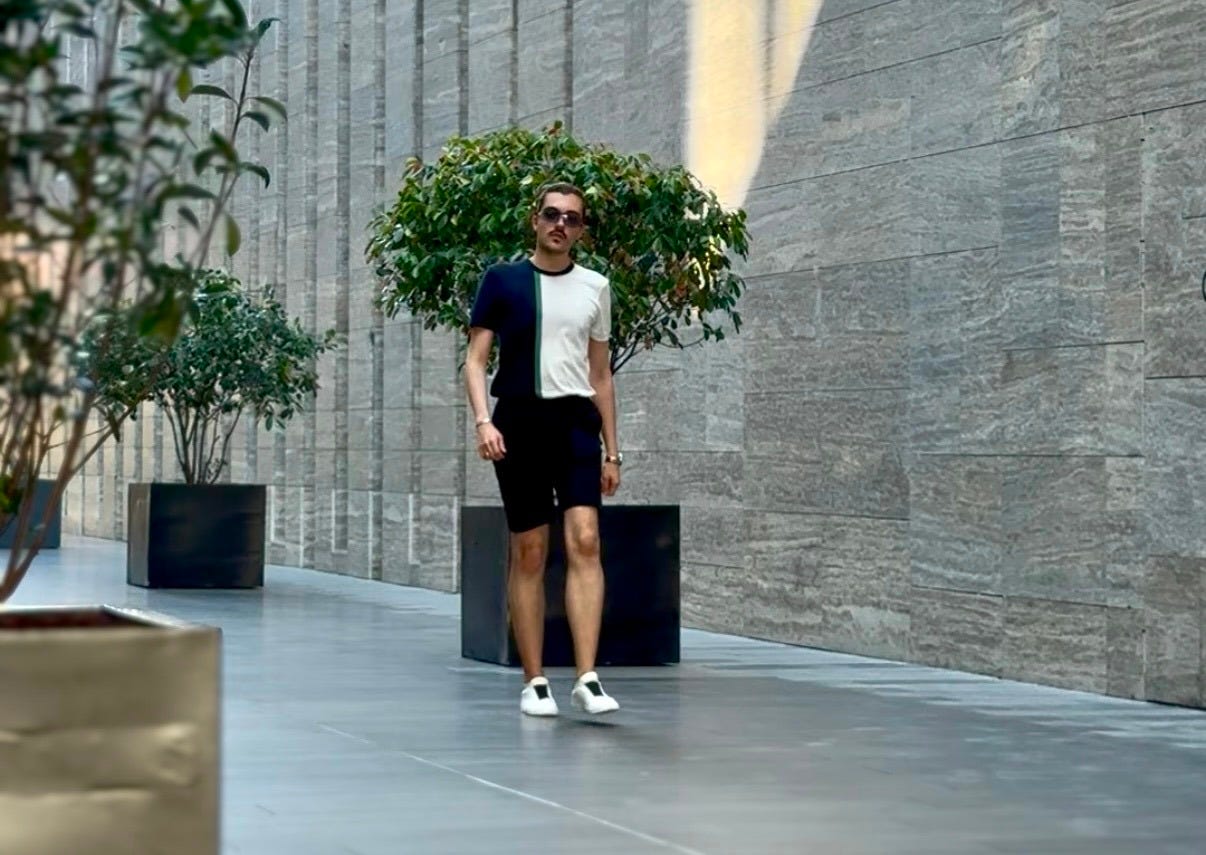
One of my favorite things about September is the strength we have acquired to start again. The summer is over. Voyages have mostly stopped.
And we return.
But what do we return to? And who do we return as?
We have spent the summer collecting rays of light that have darkened our skins, the tan lines will continue reminding us of the days by the sea. We have had encounters with people and places that have changed us more than we can imagine. We have had enough space to just unwind and enjoy the smaller things in life, and that has probably made us realize things about life that we had been too busy to locate.
And we are not the same.
But we still return.
We return to the cities where we live, to our homes, to our rituals and regimes, to our jobs, to our goals, to the ordinary parts of our lives we kept tucked under a beach towel.
Eventually, we realize that September has always felt more like a beginning of something than the end of a summer.
Psychologists describe the power of such moments as temporal landmarks. This is a distinct moment that evolves around particular dates - New Year’s Day, the first of the month, Mondays, or national holidays — they divide one period of our life from another and make a fresh start possible.
September, however, has always been associated with the beginning of school, and perhaps, it will continue to remind us of new beginnings. Add the first gusts of wind and cold air, the return of routines, the reopening of wardrobes and offices after August, and we have a sense that life is starting again.
The more I thought about The Return, the more I realized that returning is not as simple as going back.
It is impossible, time has already left its marks on us.
We have acquired new visions of life, while everything around us has continued without our presence - our office desk is still there, the emails are still knocking on our screens, begging to be let in and answered, the body we try to reconnect with has lived through everything that happened in between.
And when we return, we discover that we want an upgrade.
We want to know what to keep, what to leave behind, we want to define what happens when other people still expect the person we used to be, we need to decide what to leave behind.
All those questions began appearing as this issue was being built.
That is where September begins for The Wonder Mag.
Iglika Zhivkova’s life and work seem to revolve around the idea of putting things back in order. Our conversation asks why September makes so many of us want to reset our lives, and where is the line between care and control. And she clearly has the expertise to talk about that — through yoga, food, home, routine, lots of humour and eighteen years spent managing an entire apartment building, we are bringing stories that will help us realize the importance of discipline, solid regime, and what power cleanliness holds.
I will also speak with Yoga with Tanya, who also returned to a more visible public presence. There, we will have a different conversation — what makes us withdraw, what makes us come back, and how movement, spirituality and the body can become ways of returning to ourselves.
There is a more personal return in this issue, too.
I deliberately brought a piece from August to September - a personal essay on Amy Odell’s biography of Anna Wintour. This book accompanied me through my own return to journalism, so even though I returned to journalism reinvented, it is an actual return. I am not the journalist I was at 19, and returning to the career I was missing for so long, was not simply something that continued from where it had stopped. And I had to define the shape journalism would take in this new chapter of my life.
In the issue, The Return will move through Istanbul.
We are developing a feature around one of the most remarkable places of hospitality — Pera Palace — which has stood tall for over a century and holds stories from the past and remarkable public figures we keep returning to. As contemporary visitors, we are wondering: what are we actually looking for when we step into a hotel so vividly saturated with the memory of old Istanbul, the Orient Express and the people who passed through it before us.
Fashion is full of returns, too.
John Galliano begins a new chapter of his career with Zara and we will look beyond the collection itself. We will examine the archival pieces of Zara clothing that Galliano is expected to have transformed through his own unique vision — but in the light of recent events and the cancellation of his exhibition at the MET, we will also ask a difficult, but significant question. Who gets to return in fashion, and who decides when a comeback becomes rehabilitation, redemption or simply commerce?
Technology has created its own strange kinds of return.
In one story, we will look at how AI is being used to bring historical figures and old worlds back into the present. In another, we will ask what happens when fans can conjure the comeback of a pop star for themselves and create new music in the voice of an artist who is no longer actively under the spotlight.
Pop culture returns in its own literal ways, too.
Later in the month, we will discuss Madonna’s new era through the VMAs, where she is nominated in eleven categories. For an artist whose career now stretches beyond four decades, there is something compelling about returning to one of the stages on which her star was born. What does it mean to come back to the place where the world once watched you become a global star?
And considering September is also fashion’s symbolic beginning, I will finally sit to watch The September Issue, as I am building my own — a small act of editorial masochism, if ever there was one.
And, because no September issue should reveal everything on page one, a number of surprise interviews and major-name conversations will arrive throughout the month.
While our August issue was about reinvention, this is The Return.
It is not just about “going back”.
I wanted it to sit at the intersection of where past and present meet each other.
We do not necessarily have to resume all habits, relationships, or versions of ourselves, because it is familiar and we have come back.
This is the time we get to choose, select, return to what deserves us. We can walk back into an old room without agreeing to become the person who used to live there.
And sometimes we can reach the discovery that the most important part of returning is that we no longer want to stay.
So we change.
In September, The Wonder Mag returns to history, bodies, rituals, public lives, forgotten ambitions, places that preserve the past, and people confronting what the past still asks of them.
Sometimes the only way to understand how far we have come is to look again at where we started.
And then decide what, if anything, we would like to bring with us.
Welcome to The Return.
Ivan Ssavsski,
Founder & Editor-in-Chief of The Wonder Mag