

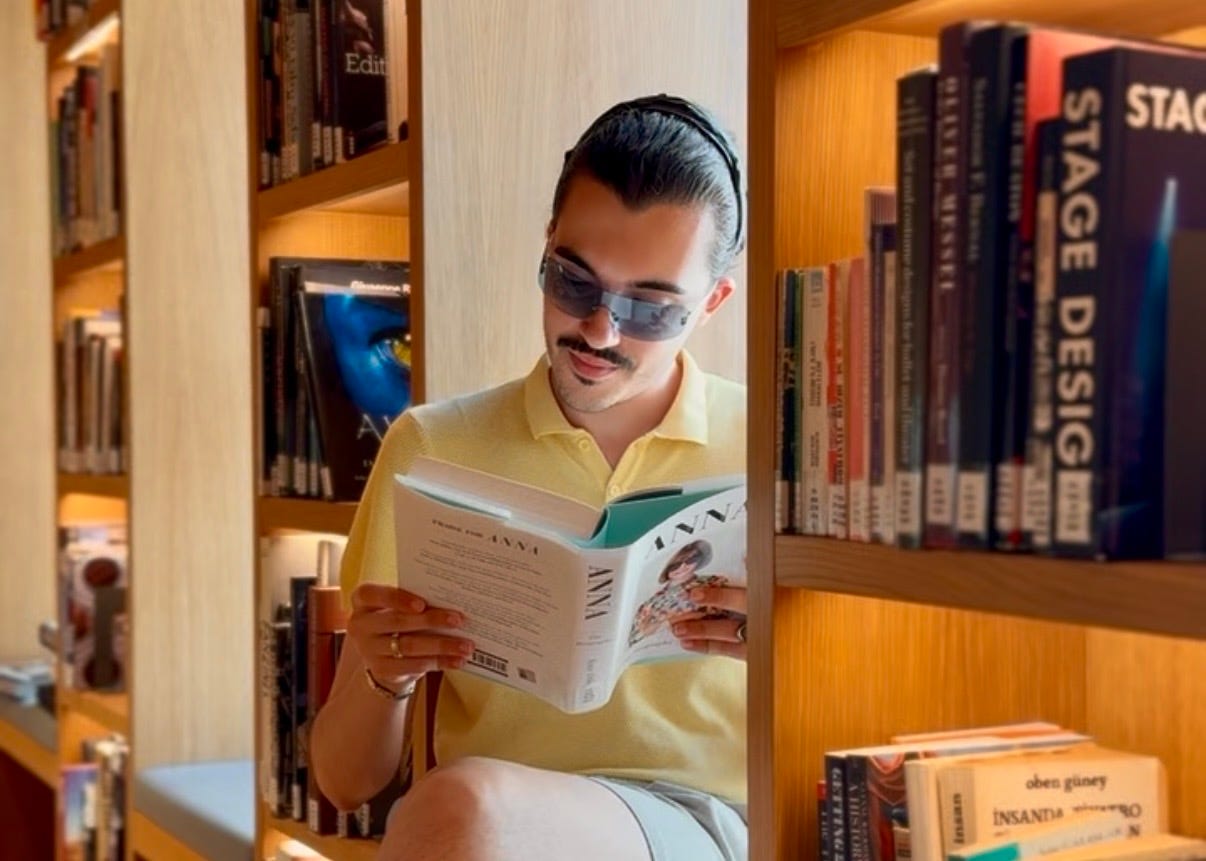
Approximately two months ago, I was reading the last pages of a book that had changed the direction of my life.
The way I was holding on to that book... I did not want to let go of it.
It felt as if I did not even want to finish it, and was desperately trying to leave a few more pages to read, to keep the experience going a little longer.
The book had become a friend.
You know how we live — we wake up, we scroll, we do all monotonous things daily life is requiring us to do — and at a certain point we do not realize how much we have disconnected from ourselves.
We lose our core identities, sometimes we forget what drives us in this journey called life, and only when we have reached the bottom, do we somehow want to remember what made us look up to the sky for a moment and happily say that you love your life.
This happened to me, too. But I began reading Amy Odell’s biography of Anna Wintour in May at a moment when I was trying to find my way back to journalism.
At the time when I was reading it, I thought I was reinventing, but later I discovered that I was actually returning.
The journalist I thought I had lost
I started out as a television journalist at nineteen.
After getting accepted into an internship program at one of the largest television companies in Bulgaria, I spent a year and a half working there and learning the profession. I became a reporter, wrote for the lifestyle website of the media company, and hosted of my video podcast there.
I interviewed celebrities, did stories for the television programmes and I felt fulfilled. I knew that every day I was waking up to a day full of opportunities and I especially enjoyed the unpredictability of the work.
Every day contained the possibility of something I could not have planned. I felt very much alive.
What persisted during all of that time, however, was the fact that I was never hired on a contract, and I was not making any money from what I was doing.
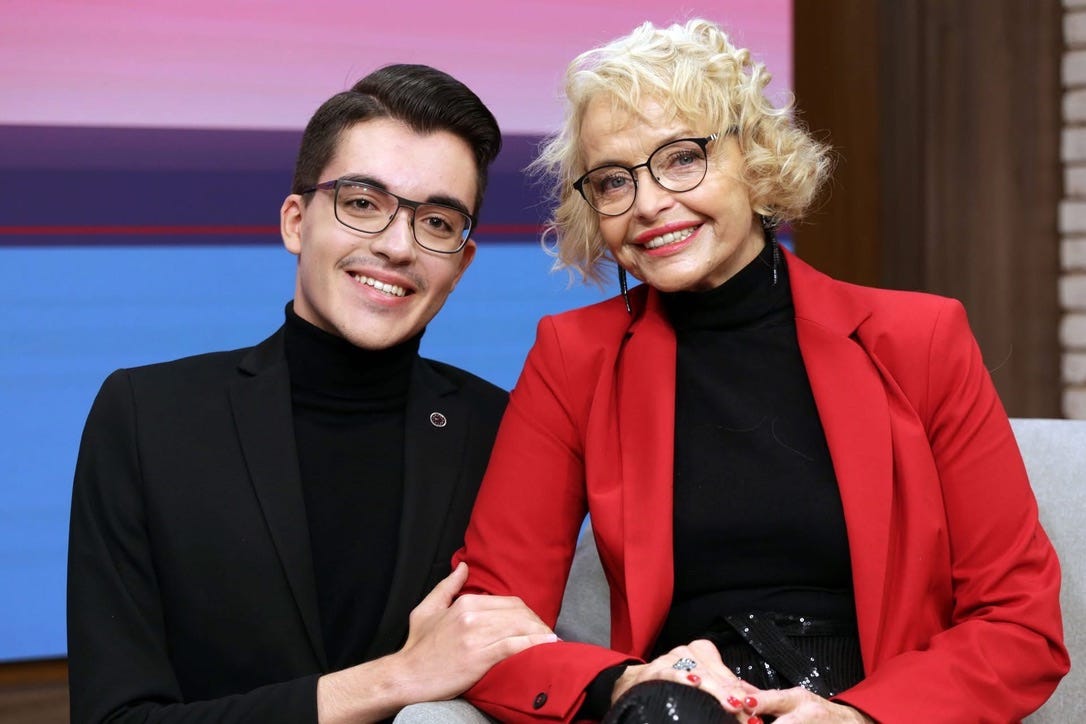
In September, 2022, I quit.
I had just returned to television after a short media program in Istanbul, and I knew I wanted more. I returned with a pocketful of ideas and I immediately started working again.
However, I returned to a lot of editorial changes within the infrastructure of the company, disagreements and the same unresolved question of my employment. I was also preparing the new season of my podcast, and somehow I was still not working on a contract.
The head of the news department invited me to visit his office so we can properly discuss the situation. And he told me not to wait at the door, but to come straight in.
I did.
Numerous times.
He was always talking on the phone and I do not blame him for being busy. After a week of attempting to find the right moment though, I still had no answer.
On what became my last day in television, I had an argument with one of the news anchors, who humiliated me publicly in the newsroom over something as ridiculous as the fact that I had greeted her twice that day.
My ego was hurt and I decided to speak to the head of news one last time.
I went to his office. Knocked. Entered.
He was talking on the phone again and made that gesture, implying that we would speak later.
I took my bag, descended the staircase one last time, and decided that this was my last day in television.
On the way out, I saw that news anchor I had argued with earlier, greeted her thrice, and left.
Then I went to the hairdresser.
Over the course of the following days, I was contemplating the decision to return and continue working like that. After all, I was still a student, living with my family, so what would I need money for either way.
Silly me.
I decided to wait a little, so my thoughts could settle. No one called.
Only the future editor-in-chief of the television’s lifestyle website asked me to write a piece about the jewellery Kate Middleton might inherit after the passing of Queen Elizabeth II.
I was deeply interested in the Royal Family so I decided to write the story. That was my final piece for television.
Nobody called me to ask what was happening with the podcast. I cancelled the interviews I had arranged, explained to the guests that there were some changes, and told them we would keep in touch.
And time stood still.
What was going to happen? Where was the newsroom? The studio? My guests?
Television had become the infrastructure of my life, so without it, I felt lost.
Writing without a newsroom
I began writing about celebrities on Medium in English.
I remember thinking I would build an international portfolio, reach readers abroad and eventually use the work to find opportunities outside Bulgaria.
Some of the articles were very successful, reaching celebrities’ publicists, producers, some of the articles even appeared prominently in Google search results.
The absence of television’s scaffolding was unfortunately obvious despite the progress I was making.
I did not have deadlines, nor editors waiting for a story. I was working for myself, and the most painful thing was that I stopped doing interviews.
I had stopped believing anyone would agree to speak with me now that I was no longer working in television.
I stopped believing I was a journalist.
And continued writing.
At the same time, my mother was continuously making me find a job, so in order to save myself from working in Starbucks, for instance, I decided to begin offering private English and Hebrew lessons.
I would work from home, teach online, make money, and continue writing, I thought.
Finding students turned out to be far from easy, but gradually, they came. Sadly, my writing was suffering from that tremendously. In order to adjust to my students’ needs I scattered lessons at deadly time blocks, which made my writing blocks quite disorganized.
Family responsibilities and health problems added further interruptions. Time was passing, I was still in Bulgaria, teaching, writing in whatever time and emotional space was left, feeling unhappy and dissatisfied.
I was still writing occasionally, but I was no longer building the professional life I had imagined.
And I wanted to leave Bulgaria.
A different life in Istanbul
I came to Istanbul in September 2024 to look for apartments. The market was hectic and I could not find a house, but I found my first boyfriend instead.
But that is another story of coming out, heartbreak, relocation, and other encounters which deserve their own attention.
I liked Istanbul. I felt liberated and alive, and nothing could stop me from moving here, so the safest possible route to stay permanently in Turkey was to become a student. I applied to university, received a scholarship, and found a way to remain here.
I found an apartment that I named The Museum of Meltdowns later. Only the four walls of my studio apartment know how many tears have been shed between them.
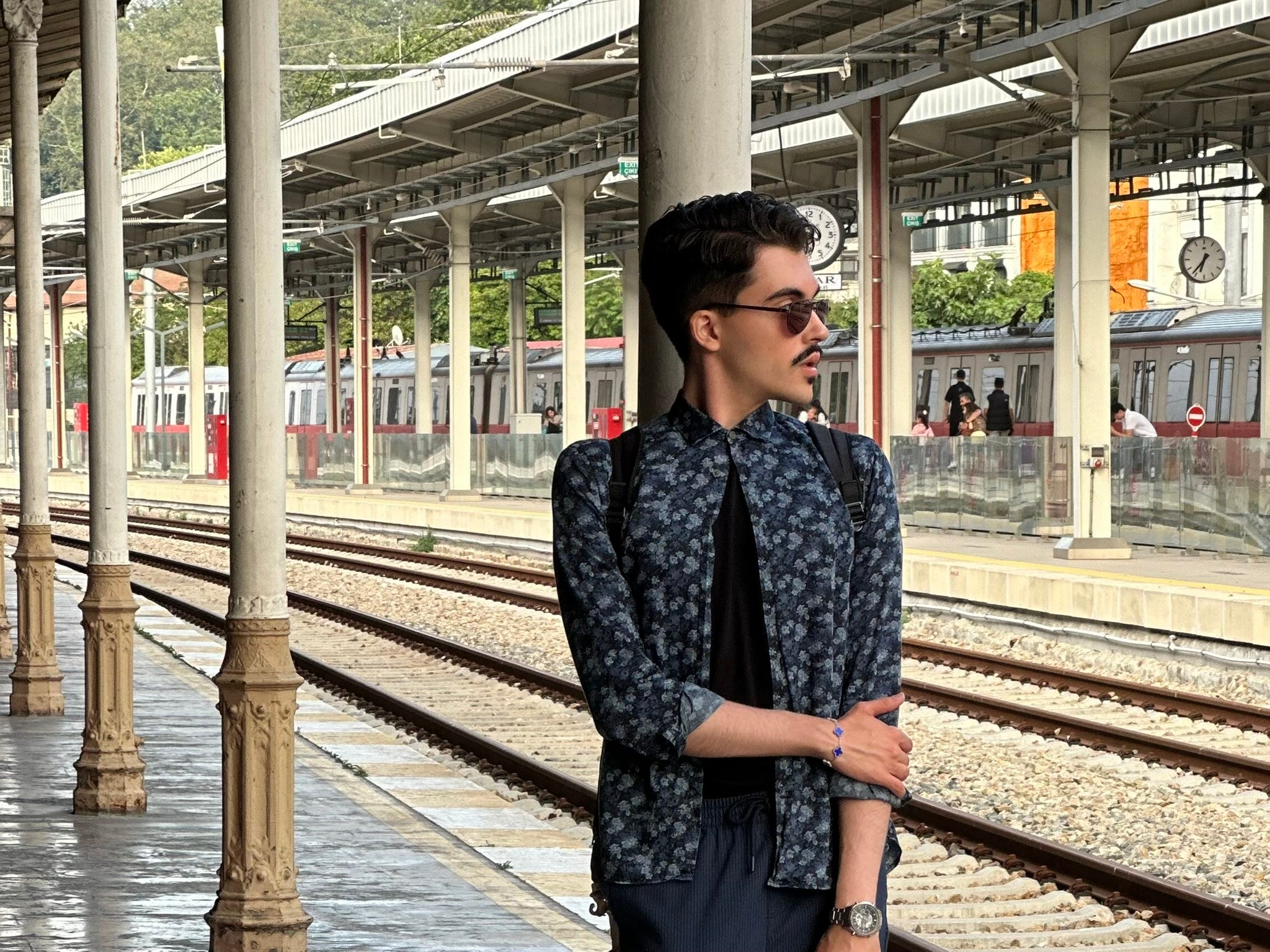
I was studying, teaching to pay my rent, navigating heartbreak and trying to establish a life of my own. Family arguments continued, and the emotional space available for writing became smaller and smaller.
Do you notice what is missing?
Journalism.
I kept blaming my heavy schedule for the fact that I had no time to write, that I had to continue teaching to earn money, so I could pay my rent, that I had to study.
And the desire to write was still there. But the actual writing was not happening. Interviews were not happening either.
There were always other things demanding immediate attention.
Finding my way back
What changed that outcome, however, was starting therapy in February this year. I had just gone through another cycle of family arguments, caused by a situationship with a friend of mine. Not only was I suffering from the fact that he left Istanbul for an undefined period of time, but I also had to defend my decisions to my family.
I knew I could no longer continue like that so I booked my first therapy appointment with one of my role models in journalism. I am so thrilled that my therapist is a renowned journalist and a psychologist. She just understands me in ways no one else does.
My therapist always tells me I learn very fast and apply that knowledge to my life very fast as well. Once we defined what the actual problems were and gave myself enough space in which I could breathe and exist, I found I needed to start again.
So I published a new article on Medium. Then the next week another one. They were both personal - the first was the story behind the last situationship and the second was a restart of a series dedicated to Sex and the City.
Then I decided, I needed to start writing about celebrities and wrote about Christina Aguilera.
Somehow, I started returning to my core identity of a journalist that was buried under years of trauma, heartbreak, survival mode, and teaching.
Around that time, I went to Bulgaria for a few days where I saw The Devil Wears Prada 2 at the cinema, and there is a scene in which Miranda Priestly turns to Andy and says:
“God, I love working.”
And something in me clicked.
I love working, too.
I missed journalism so much, I missed the creative world tremendously, missed interviewing people, missed telling stories, working with images, ideas.
I could not wait to return to Istanbul and find a way to make more room for it.
“Of course she was wearing the sunglasses”
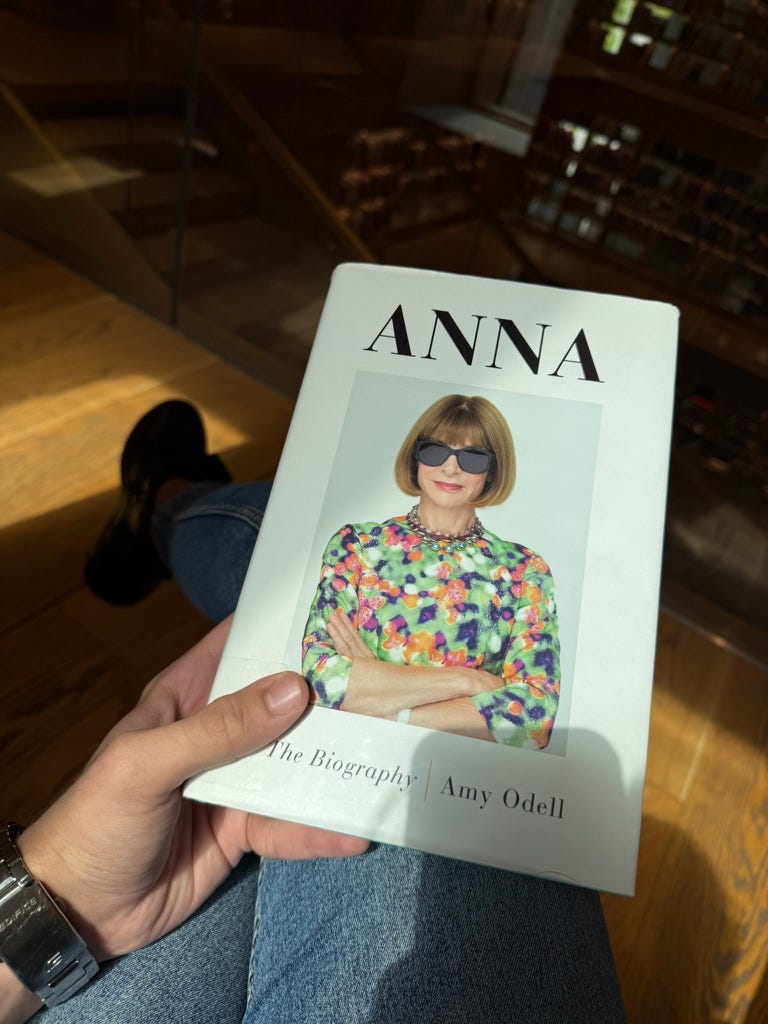
A few days later, I was back, and one day in May, I was sitting in the library at AKM, , the Atatürk Cultural Center, which currently functions as The Wonder Mag’s headquarters.
I knew Miranda Priestly’s character is partly built on Anna Wintour, I knew Anna was the editor-in-chief of Vogue until last year, so I opened Vogue’s website and subscribed for a year.
Then I searched the library catalogue for Vogue, looking for archival issues or books about Vogue that might help me understand how a magazine has survived over a century, continues to be innovative, and challenges the status quo.
However, while I was scrolling through the results, I found something much more interesting.
Anna Wintour was staring at me from the cover of Amy Odell’s biography, wearing her iconic Chanel sunglasses.
I took the call number and started browsing the shelves. I found Anna on the third floor and took the book. When I opened it, the first sentence I read in the introduction was:
“Of course she was wearing the sunglasses.”
So was I.
I always wear mine.
I began reading the description of what happens to be the day following Donald Trump’s first election as president, and the reactions it had caused within Vogue’s ranks and the all-staff meeting that followed.
What got my attention, however, was:
“Anna started the day as usual. She rose by 5:00 a.m., exercised at 5:30 or 6:00 (depending on whether she played her twice weekly tennis or worked out with her trainer), sat for thirty minutes for professional hair and makeup, and was then chauffered to her office at 1 World Trade Center, where her three assistants and her usual breakfast — a whole-milk latte and a blueberry muffin from Starbucks, which would mostly go uneaten — were waiting for her.”
What really got my attention was how much structure there was in Anna’s days and I felt tempted to test that out, too.
The morning after
The following morning, I rose at 5 a.m. It was a shock to my body, but I knew I wanted to test whether a more deliberate routine could give me the space I had been missing. I proceeded with day, and returned to “Anna”.
I began building my own 5 a.m. morning routine, consisting of doing yoga after waking up, having breakfast while listening to Mel Robbins’ podcast or The Run-Through with Vogue, going to AKM, studying Turkish, reading Vogue, reading “Anna”.
There was a desk, a book, and a plan for each day.
A book suddenly turned into my companion, my friend, a safe place I returned to daily.
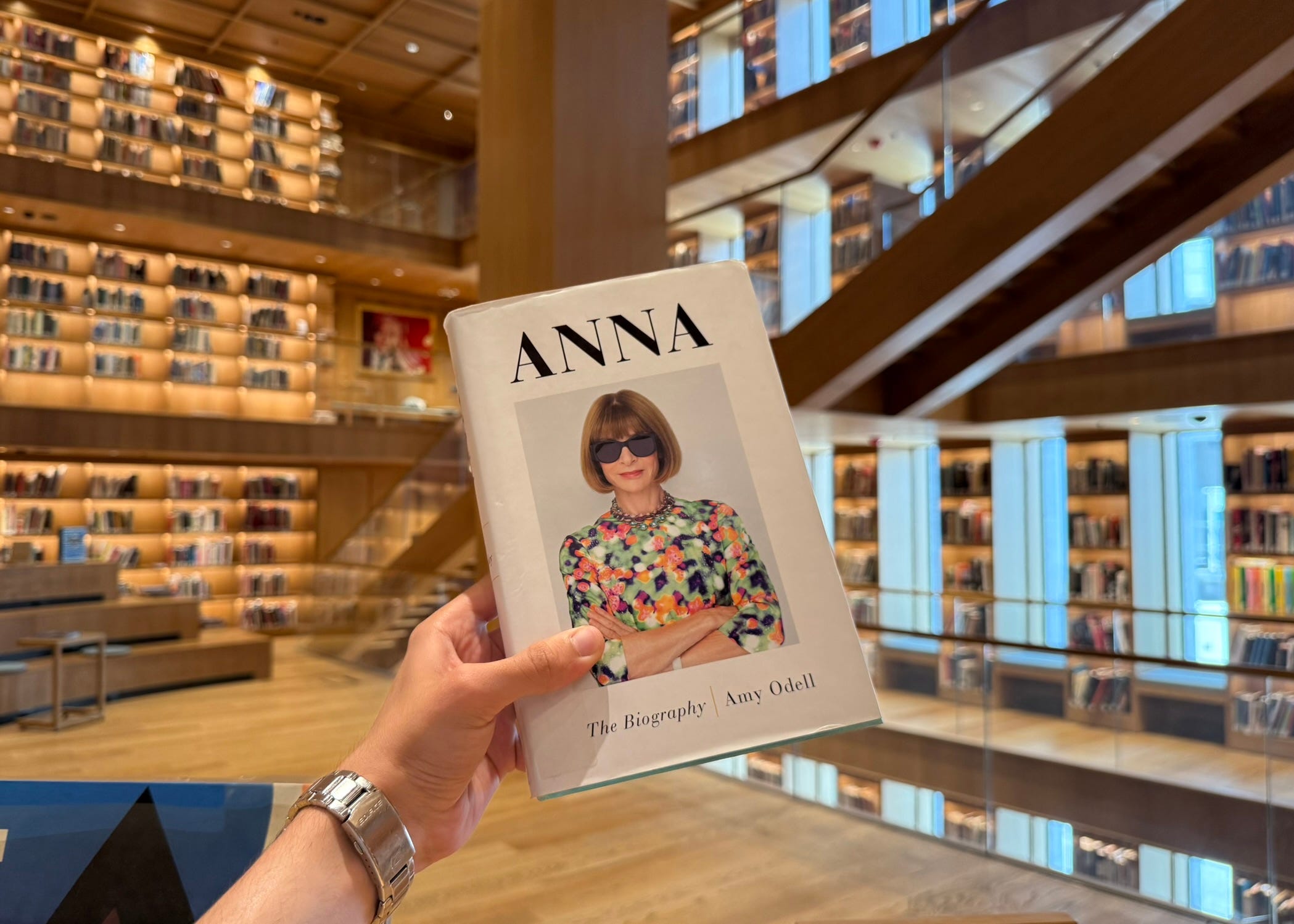
Anna’s routine, her decisiveness, her sharp thinking and way of communicating her ideas (she’ll probably faint if she sees the length of this essay) all forced me to start fighting for what I believe in. To find a purpose, to define it, to continue performing.
I did not want to become Anna Wintour. I wanted to understand what it might mean to take my own work seriously enough to build a life around it.
From Medium to The Wonder Mag
One of the decisions that followed was to move my writing from Medium to Substack.
I did not enjoy Medium’s architecture anymore, and I desired to have something more branded, more me. I knew about Substack, I was seeing it everywhere more often, and I eventually decided to migrate. I needed to build something more capable of holding the different subjects and formats I wanted to explore.
That is how The Wonder Mag was born.
The more important change, however, was that I was even thinking about myself in a different way.
While reading Anna Wintour’s biography, I realized I did not want to write occasional articles anymore. I wanted to build a magazine. I wanted interviews, features, essays, video, recognizable point of view.
I wanted the work to have a structure that could support it and I wanted to stop waiting for somebody else to give me permission to be a journalist.
When I began considering interviewing again, I was frightened, and my decision to actually start doing it again, I largely attribute to my therapist. Only the two of us know how insecure I was.
“Who would agree?” - I asked my therapist.
“You are an international media, Ivan. You have actual television experience, you know languages, you have an editorial vision. Of course they would agree.” - she calmly reminded me.
And yet, I was spiralling…
Sending the first interview pitch to somebody was terrifying. What do I say to them, how do I present myself, where am I publishing them? The Wonder Mag?
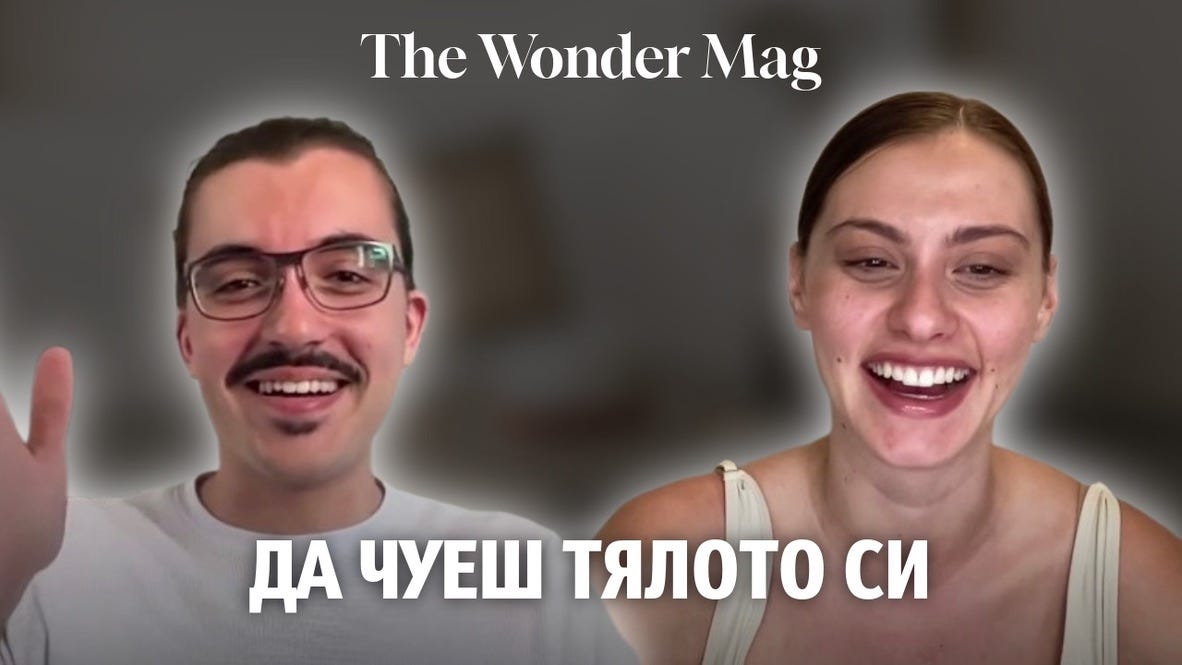
I created English and Bulgarian YouTube channels to accompany the publication and started approaching potential guests with concrete ideas.
I was surprised to see that when I presented myself calmly, as a journalist, as a writer, as someone with actual experience, and a current appealing idea, people began saying yes.
Some declined for practical reasons. Others remained in contact. Some agreed to interviews that have since become part of The Wonder Mag.
The newsroom began to exist, but this time, I was building it by myself.
Returning, not reversing
Once I started producing and The Wonder Mag began to take shape, I felt as if I was reinventing my journalistic identity.
I was changing my routines, building a publication, returning to interviews and trying to create a different professional life. I was still teaching, and I am still teaching, but there is balance. There are priorities.
In August, I began writing this piece in the theme of The Summer of Reinvention, but in the light of the events that were taking place in my life, I realized I was not reinventing, but returning.
For me, the key difference was that I was not merely reinventing myself as a journalist, I was bringing the intervening years with me, while returning to my actual calling.
The teaching. The migration. The relationships. The disappointments. The experience of trying to build a life without the professional infrastructure I had once depended on.
None of it had made me the same person I was at nineteen.
Even one of my interviewees for The Summer of Reinvention, who is a therapist and voice image coach, made a remark on the fact that my gaze seemed different now.
He knew me from my days in television. He remembered my eyes wandering a lot, chasing every beautiful thing around me.
Today, he said, the curiosity is still there, but there was more certainty in the way I looked — as though I knew what I was looking for.
What he said, embodies the return. It is a return to my roots, to my identity. Even to my mother tongue, as I am doing a lot of the interviews in Bulgarian.
I am returning to journalism as the person I have become.
The last pages
When I finished Anna in July, I cried. The ugly cry.
I could not believe that the book carried me through my own return to journalism, helped me believe in myself and become more confident.
While reading, I rebuilt my routines, and by the time I finished the book, The Wonder Mag existed.
The book had not done all of that for me.
My therapist is beside me each week and she initially helped me create space for change.
Other people had encouraged me, supported me and agreed to become part of the publication.
But Anna arrived at the exact moment when I needed a model of what an editorial life could look and feel like. It helped me understand that structure was of utmost importance and it reminded me I had not lost the part of myself that loved journalism.
So thank you, Amy Odell, for writing the book.
Thank you, Anna Wintour, for the example and for continuing to create the most special and vivid moments in fashion, for preserving fashion and the legacy of designers.
Thank you, Miranda Priestly, for reminding me that I love our creative world.
And thank you to my therapist, who helped me begin making the decisions that allowed the work to return.
And I am thankful to myself for letting myself believe I have so much more to say.
I am still teaching. Still building.
The Wonder Mag is still very young, still becoming, but it is already a real editorial home.
But I know what I am returning to. And I know that the person returning is not the same as the one who left.
He is sharper now. Clearer. Enriched. Bruised in some places.
But unmistakably Ivan.
Founder & Editor-in-Chief of The Wonder Mag.
Read next: THE RETURN | September’s Editor’s Letter:
THE RETURN | September’s Editor’s Letter.

One of my favorite things about September is the strength we have acquired to start again. The summer is over. Voyages have mostly stopped.
A very beautiful story that touched my heart, now I will definitely read this book!💗