

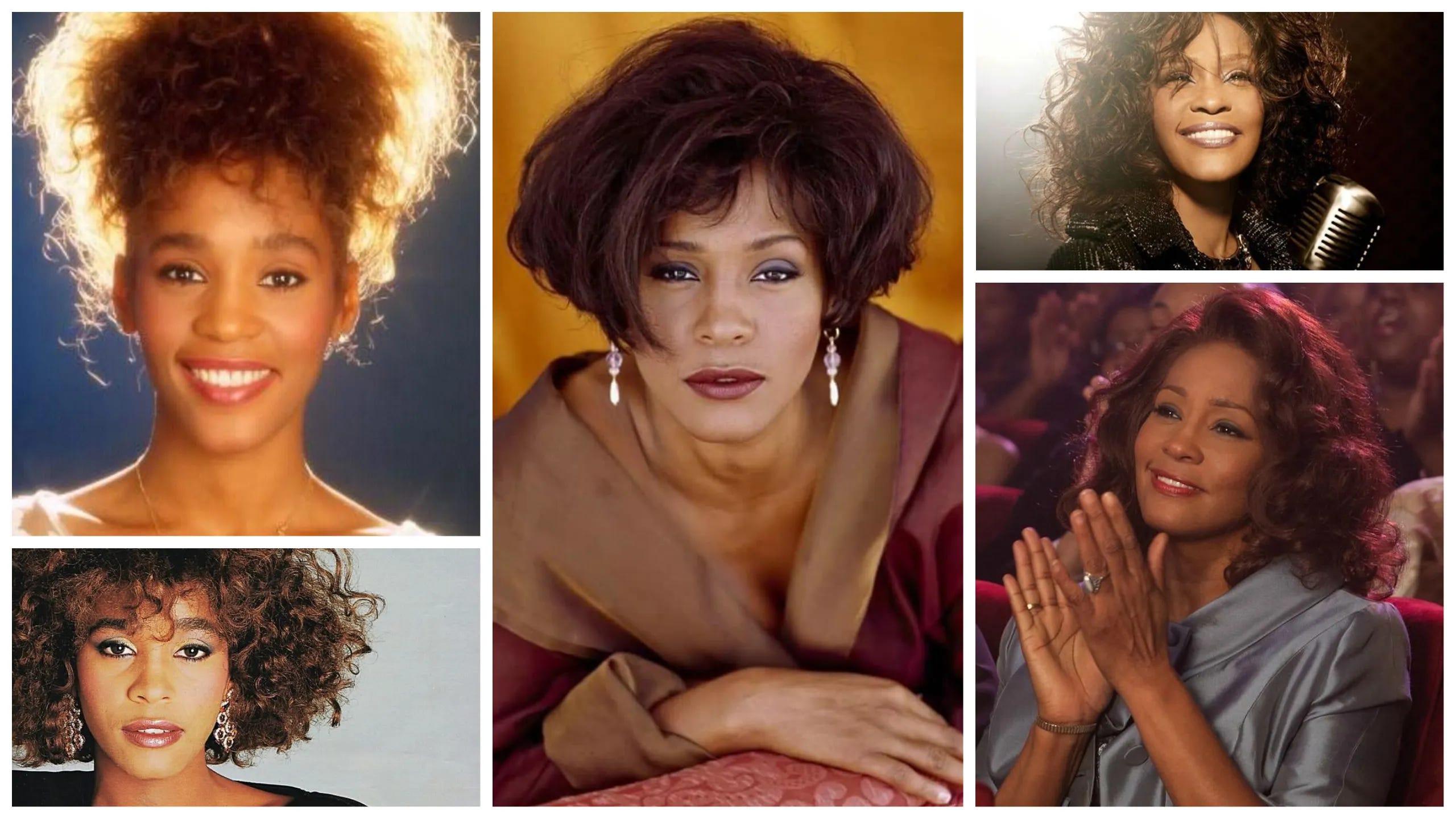
My first vivid memory of Whitney Houston is not of hearing her sing, I certainly had before, but of the day I learnt she would never sing again.
I was nine years old when Whitney Houston died in February 2012. The world had seemed to stop for a second, and nobody could process the news - Whitney Houston, dead at forty-eight. Families all over the globe were devastated, as if they were mourning a close friend or relative.
Mine was no different. My mother played only Whitney’s music for days after learning of her passing, as though the walls would hold the melody forever. And probably they do, now that I am thinking about it again.
It was the first time I remember witnessing the death of an artist feel almost like the death of somebody people actually knew.
At nine, of course, I could not understand the scale of what had been lost. I knew the songs, I knew the impact Whitney had on music, but I would have to grow older to begin understanding the woman behind all that.


Years later, during the lockdowns of 2020, I finally started listening to Whitney Houston properly, and I do not mean the inevitable greatest hits that everybody cherishes, but the albums, the performances, and her interviews. I was curious to get closer to her as much as I could.
Whitney had already been gone for eight years, and yet sitting in front of the television in the living room felt like discovering a new friend, someone I could obviously never meet, but someone whose way of talking about life could still reach mine.
Her 2009 conversation with Oprah Winfrey became a favorite of mine and at that time I watched it as a source of inspiration on how to close one chapter of your life, take the lessons, and move on. The image of Whitney returning after years of public speculation and criticism felt like evidence that somebody could fall apart publicly and still find the courage to stand in front of the world again.
Three years ago, while writing about what would have been Whitney Houston’s 60th birthday, I spoke with Larry Armstead II, associated with The Whitney Houston Platinum Club. He offered an interpretation of the Oprah interview that I still think about whenever I see footage of it online.
For him, Whitney’s conversation with Winfrey was an attempt to reclaim authorship over a life that, by then, had been interpreted by everybody else.
“I don’t think the purpose of the Oprah interview was to make anybody say: ‘Oh, poor Whitney, I feel so sorry for her.’ She wanted to own her truth, because for so long the media and the press had owned her truth. And she was like: ‘You know what? I’m going to take the power of it. I’m going to say that this is what happened to me. I was there. This is how it went down.’”
When the world owns your image
Whitney Houston’s career turned her into one of the defining voices of modern pop music, but her voice also created enormous expectations around what it was supposed to remain..
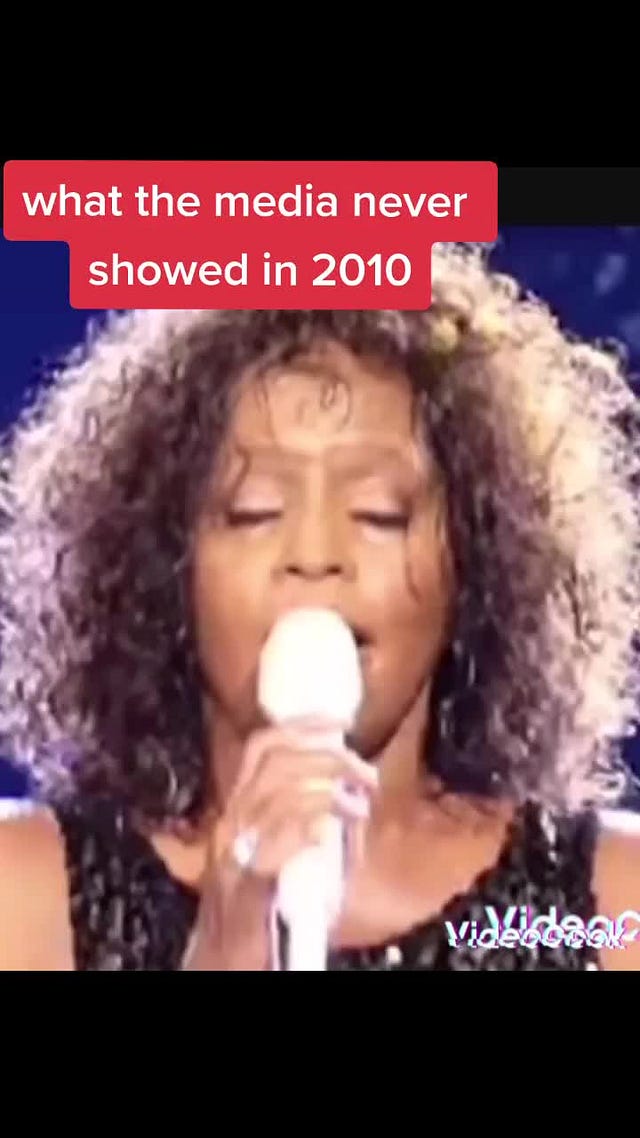
People remembered how it sounded when they first fell in love with her, and by the time Whitney embarked on what would become her last world tour—the Nothing But Love World Tour—there were discussions around the changes in the artist’s voice.
 Tiktok failed to load.
Enable 3rd party cookies or use another browser
Larry acknowledged that life choices had affected the instrument, but he also spoke about the extraordinary pressure Whitney had lived under. He did not forget to mention the physical strain of performing through personal hardship, and the sheer amount of herself she continued to give to audiences:
“Even towards the end, when she was struggling with having the most powerful vocals that she knew she was capable of, she still came out there, and she gave you everything she had. That is the epitome of Whitney: ‘I’m going to give you the best of me. You give me all of you, and I’ll give you all of me’, is what she would always say.’”
Today, I am looking at all of that through a different lens.
Why does the public continuously expect the people it adores to evolve while simultaneously demanding that the qualities it first loved remain untouched?
People live, and living inevitably changes them. Experience alters the conditions under which their gifts exist. Bodies change. Voices change. Or sometimes people simply age. Groundbreaking.
As a society, we have reached a moment where everyone is an expert in health, body image, productivity, vocal delivery, and the list could go on, and we publicly share our insulting opinions online, without taking into consideration that the people we are commenting on are human beings with feelings, too.
Suddenly evolution becomes decline. But a human voice is not a museum exhibit. Neither is a human being.
Whitney could not remain permanently in the times when the world first decided she was The Voice.
And perhaps part of the tragedy of being given such an enormous title is that every later version of yourself is compared with the person you were when you earned it.
The impossible comeback
 Tiktok failed to load.
Enable 3rd party cookies or use another browser
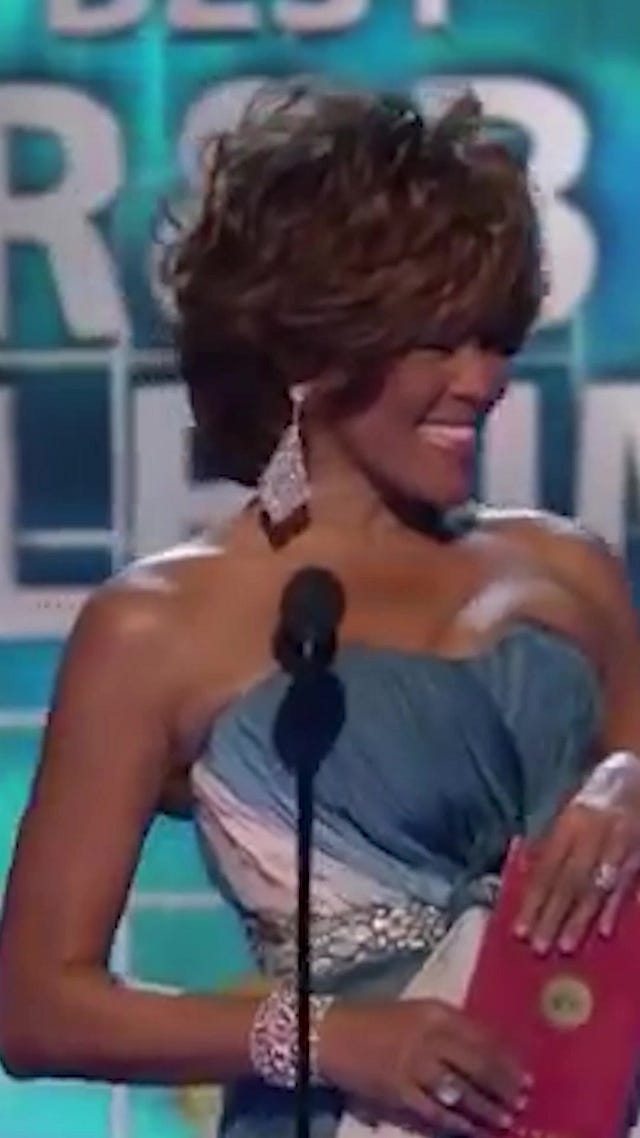
Whitney returned with the album I Look to You in 2009 after years of people repeatedly declaring her career was over.
Larry remembered the pattern clearly: people would count her out, insist she would never sing again, and Whitney would return anyway.
We love comeback stories because they allow us to believe that life can be repaired.
However, the public has turned comeback into an expectation or a demand that the artist returning will return unchanged, wanting to see the same body, face, confidence, and energy.
That is not a comeback, though. That is something resembling restoration, but human beings are not The Empire State Building standing tall above New York, unchanged by the passing of time.
When Whitney returned with I Look to You, she came back older, altered by experience, and she carried a voice that no longer sounded exactly as it had at twenty-two. That is precisely what made her return human and genuine.
Reinvention is not recreating a former self seamlessly, but allowing yourself to return while carrying what has led you to that reinvention and noting that the person returning is different from the person who left.
The woman behind The Voice
A nickname like The Voice is not given to everybody, but to a person whose identity and talent can carry it. Undoubtedly, that person is Whitney.
Carrying that nickname, however, can be a little dangerous, because the person possessing it is somehow reduced to it and to what she gives everybody else.
We look at artists as if they are required to be people who are unmistakably worthy of looking up to. Perhaps it is enough to take their art seriously without demanding that their private lives provide us with moral instruction.
Whitney was a voice.
She was also a woman whose interviews reveal her humour, stubbornness, faith, vulnerability, irritation, warmth and a desire to be understood beyond the mythology around her. That is fascinating.
Understanding her does not require approving every choice she made. The woman was more complicated than the title.
That is one reason Larry recalled the conviction with which she performed, her relationship with audiences, and the sense that, even when she was struggling, she continued to give everything she had.
The world heard extraordinary notes.
The person producing them had to live the life required to make them.
Those are not the same story.
The greatest love of all
 Tiktok failed to load.
Enable 3rd party cookies or use another browser
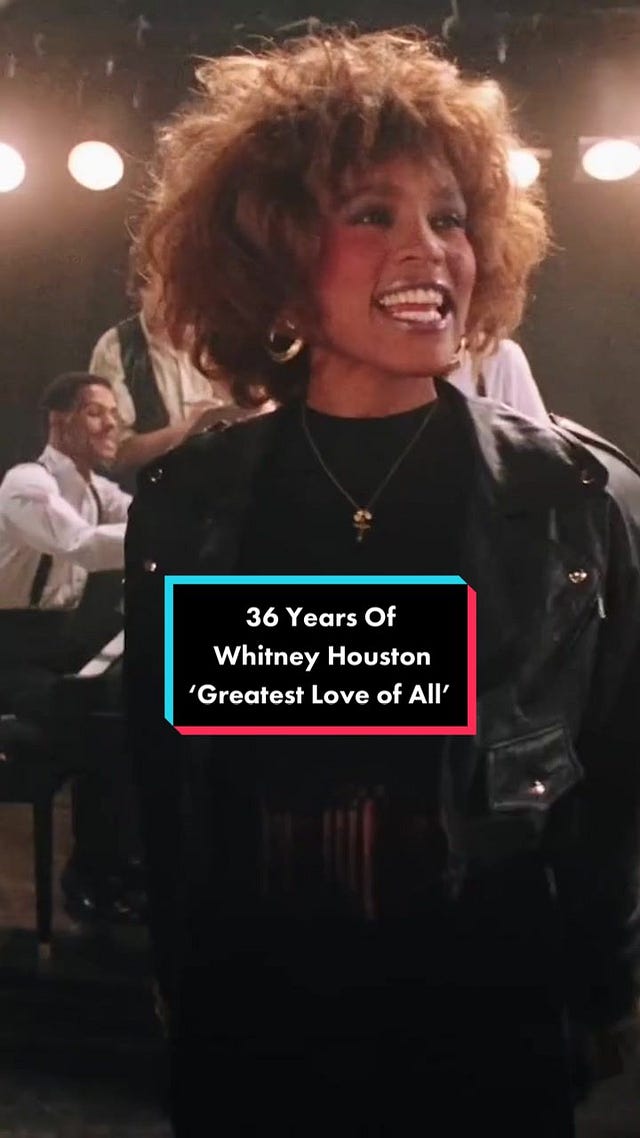
There is a reason “The Greatest Love of All” became such an important piece of Whitney’s legacy.
Its message is about self-love, self-belief, and reaching the inner strength. Every listener, though, takes something slightly different from it.
Larry told me that the song took on an entirely different meaning after a devastating breakup. During that period, he began treating its central idea as work—going inward, rebuilding and learning how to rely on something inside yourself when external reassurance disappears.
What makes me reflect on what he said is that self-love here appears to be closer to a form of authorship in the decision that nobody else gets the final word on who you are.
Not a partner who left. Not an employer who rejected you. Not a journalist who wrote badly about you. Not the audience that fell in love with a previous version of you.
Not even the person you once believed you had to remain.
You decide what happens next. That does not mean the rest of the world stops talking.
Whitney certainly knew that.
Knowing your own strength
Another Whitney song became part of the language Larry used when we spoke in 2023: I Didn’t Know My Own Strength.
To him, Whitney’s life repeatedly demonstrated that people could collapse without permanently disappearing.
He described her as somebody whom the public repeatedly counted out and who continued finding ways to return.
In 2023, I perceived that primarily as a proof Whitney was resilient, but today I think Whitney had the strength to stop performing the version of herself everybody expected.
Larry imagined that, had Whitney lived, she might eventually have stepped away from the pop industry, perhaps she could have been singing gospel or jazz occasionally, perhaps simply singing at home, growing older without proving that she could still perform at the level the world demanded.
Nobody can know what Whitney Houston would have chosen, but there is something moving in the possibility of Whitney no longer having to fight for the right to remain Whitney Houston.
Just a woman allowed to live.
Whitney, at 63
Today Whitney Houston would have turned 63.
The obvious way to commemorate that date is to return to the voice. And of course we should.
The recordings remain extraordinary. The performances remain part of musical history. Generations who never experienced Whitney Houston in real time continue discovering what happened when she opened her mouth and sang, and perhaps they are discovering her from a better place, where they do not attach to her image what the tabloids were once writing.
But perhaps remembering her properly also requires remembering there was an actual person, not just the gift she left us.
There was always somebody underneath The Voice.
A woman who was celebrated, scrutinised, idealised, dismissed, welcomed back and repeatedly interpreted by strangers.
A woman who, at one of the most important moments of her later career, sat down and attempted to tell the story herself.
That is the Whitney I find myself thinking about each time I see something related to her.
Not just the woman who reinvented herself. The woman who tried to reclaim herself.
Perhaps that is the greatest love of all - learning that your life remains yours even after the world has developed its own version of it.
The world called Whitney Houston The Voice.
Maybe one of the most loving things we can do now is remember that she was always so much more than that.
Archival note
This essay revisits and reinterprets reporting first published in 2023 for Whitney Houston’s 60th birthday, including an interview with Larry Armstead II, associated with The Whitney Houston Platinum Club.